
Official Statement - Sigenergy Installation Quality and Rectification Requirements Effective Date: 9 October 2025
1 Nov 2025
By
admin
0 comment(s)
Official Statement - Sigenergy Installation Quality and Rectification Requirements
Effective Date: 9 October 2025
Dear Partners,
Thank you for your ongoing support and professionalism.
We have recently completed a detailed review of several AC plug issues on large single-phase Energy Controllers. From site inspections and product testing, we found that on occasion installation methods differ from our official installation manual.
Since safety and reliability are our top priorities, we’re taking proactive steps to ensure our installers
are fully informed of the correct installation process.
What Installers Need to Keep in Mind in Reference to Installation Manual
1. Cable size
-
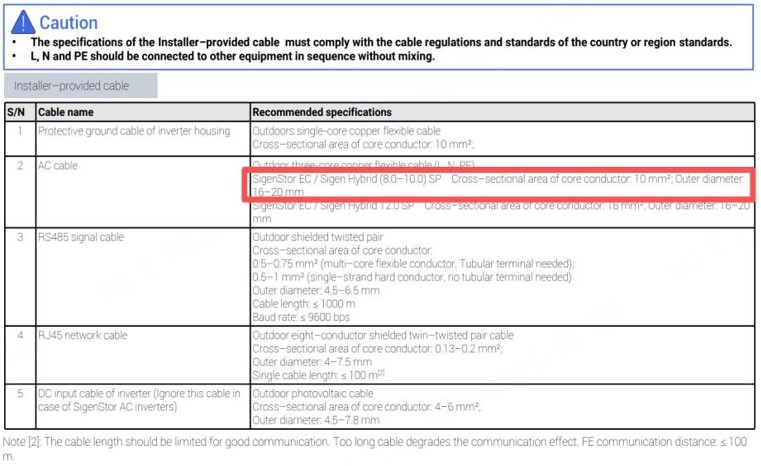
For 8 kW & 10 kW single-phase Energy Controllers, use at least 10 mm² AC
-
For 12 kW single-phase Energy Controllers, use at least 16 mm² AC
Using thinner cable can overheat components and cause damage.
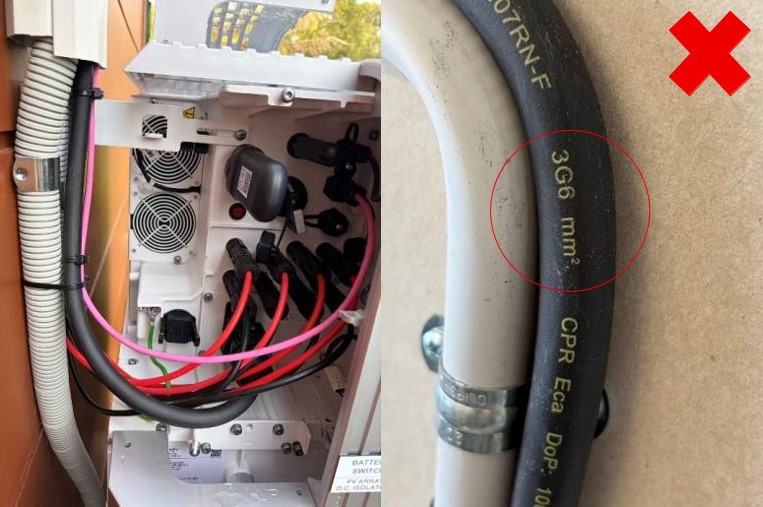
Undersized AC Cable used - 10KW 1PH Energy Controller installed with 6mm² AC Cable leading to overheating and system damage.
2. Ferrules and conductor ends
-
Always use ferrules sized correctly for the cable you’re working with (10mm ferrule for 10mm cable/16mm ferrule for 16mm cable)
-
Don’t clamp bare wire strands directly under screw terminals - this can split or break wires and cause bad connections.
Example from recent site inspection:
No ferrules used — screws directly compressing conductor strands causing wires to split or break (in some cases, more than 3 out of 7 strands broken).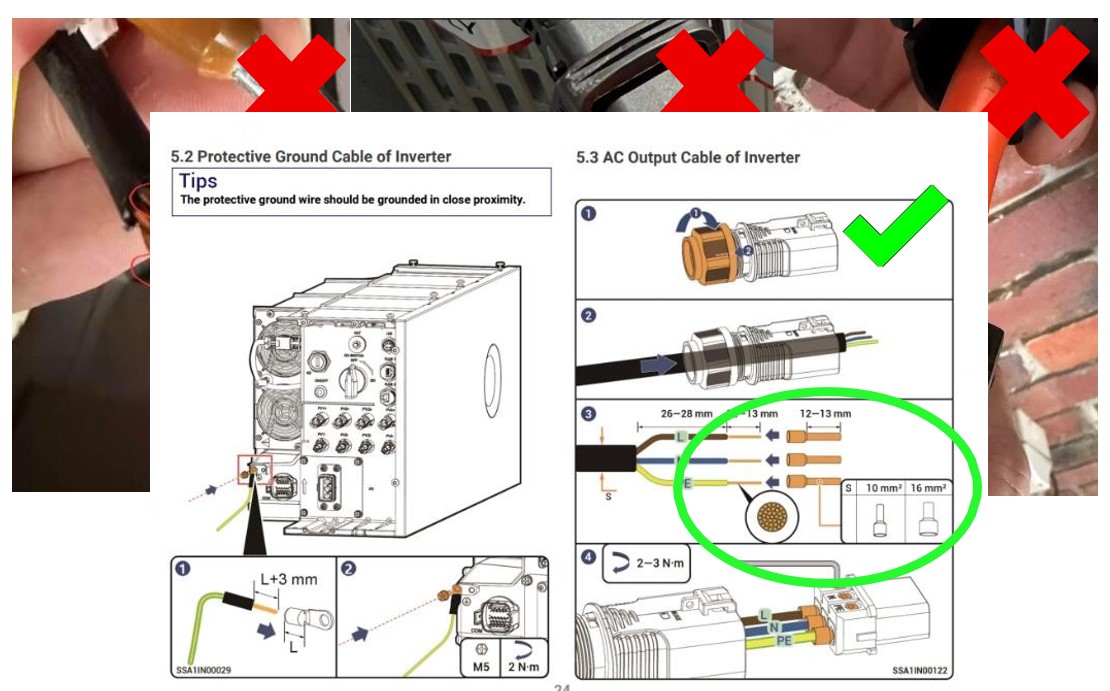
3. Crimping tools
-
Use a proper hexagonal crimping tool for ferrules to get a solid, safe
-
Avoid using pliers or other non-standard tools that don’t give a firm, secure crimp: loose crimps can overheat or fail.
Example from recent site inspection:
Non-standard crimping tools used (such as pliers or half moon crimping tool). Improper crimping resulted in irregular, folded or loose ferrules.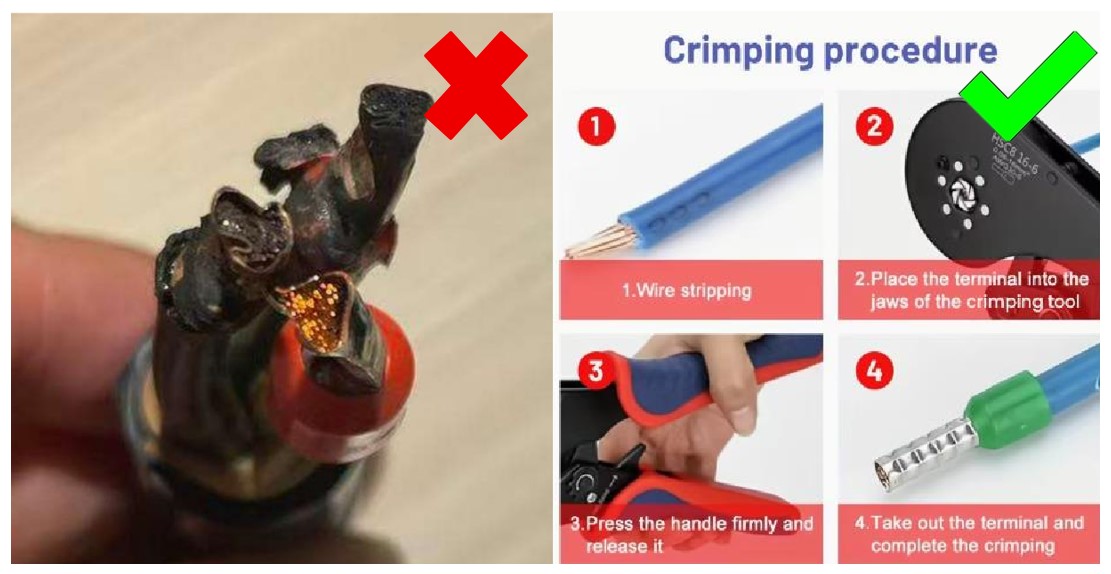
4. Cable bend radius
-
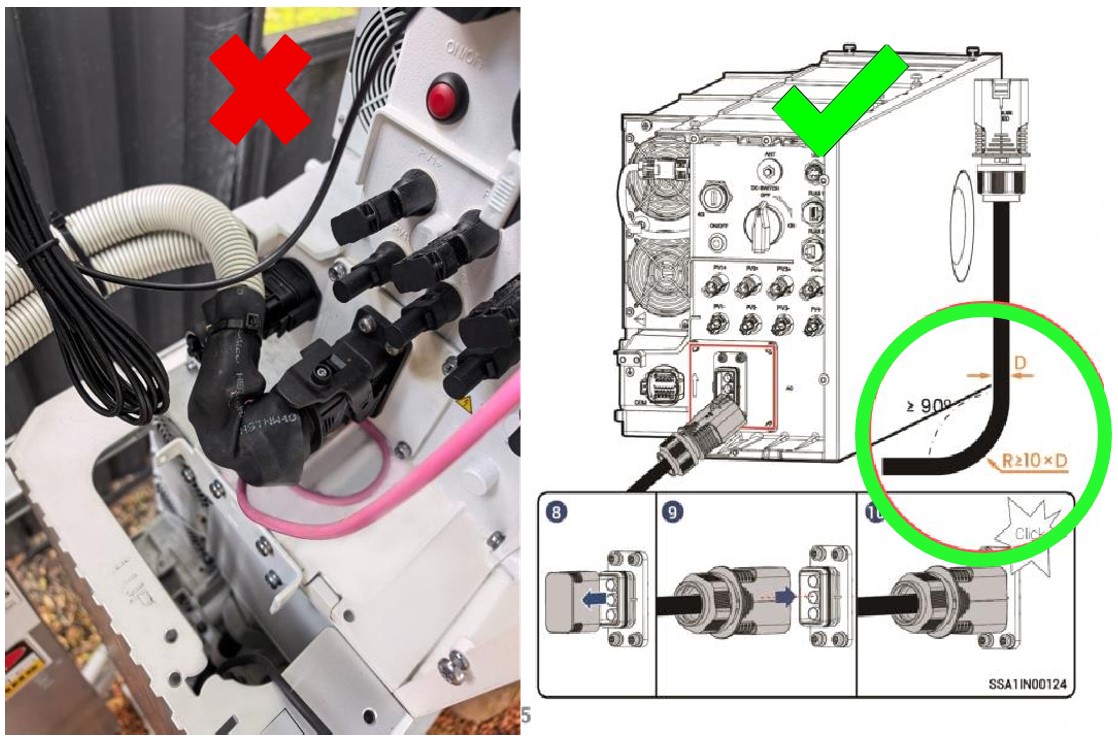
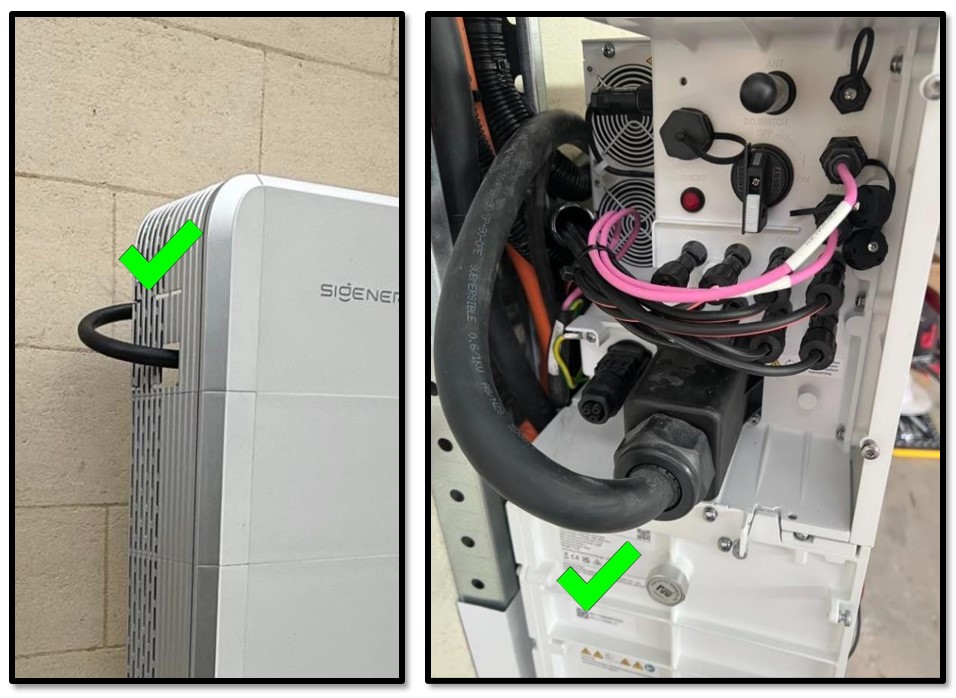
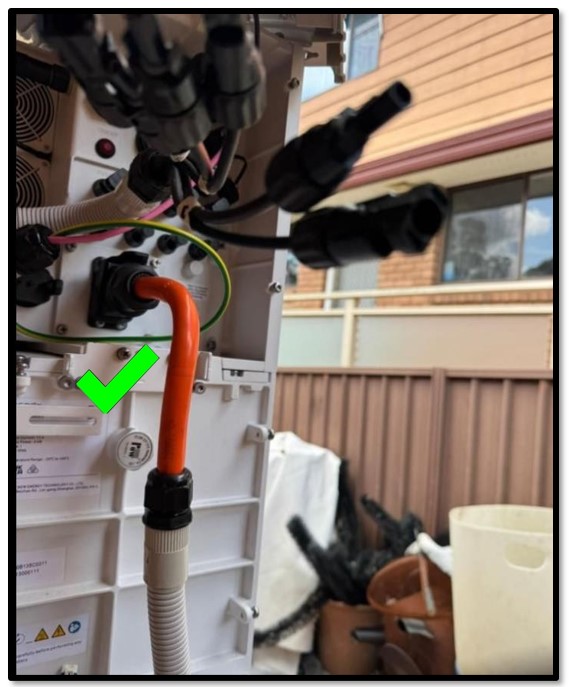
Make sure the AC cable isn’t bent too sharply: the minimum bend radius should be 10 × the cable’s outer diameter.
-
Tight bends can stress terminals and increase the risk of overheating or
Example from recent site inspection:
The bend radius of the AC Cable is less than 10 x its outer diameter.
What Sigenergy Is Doing - And How We’ll Work With You
Training & support
-
We’ve held training sessions and webinars, and we’ve launched the SigenCare Program to help raise awareness and share best practices.
-
Random on-site inspections will continue across Australia to check installations, provide feedback and identify where help is needed.
-
We have added a compliance checklist to our MySigen App during the commissioning process to ensure no important steps are missed.
-
We’re developing a new AC plug design to reduce the chance of installation error in the future.
Rectification & compliance
-
If an installation doesn’t meet our guidelines, we’ll let you know what needs
-
You’ll need to redo non-compliant work so it meets installation standards, and allow re-inspection
-
We’ll supply technical help, tool advice (for things like crimping), and guidance to support rectification.
-
Please note that a refusal to carry out requested rectification work will result in loss of installer certification, meaning you will not be able to install Sigenergy products until the rectification work is completed.
Warranty & responsibility
-
From the date of this notice, damage or loss caused by poor installation (i.e. not matching the installation manual instructions) will not be covered under product warranty.
-
We emphasise that we want to help installers do great work - this measure is meant to encourage best practice, not to penalise anyone unfairly.
Sigenergy is fully committed to safe, reliable, and professional installations - protecting customer outcomes and your reputation.
Thank you for your cooperation, commitment, and quality workmanship.
Best regards,
The Sigenergy Service Team
10 October 2025